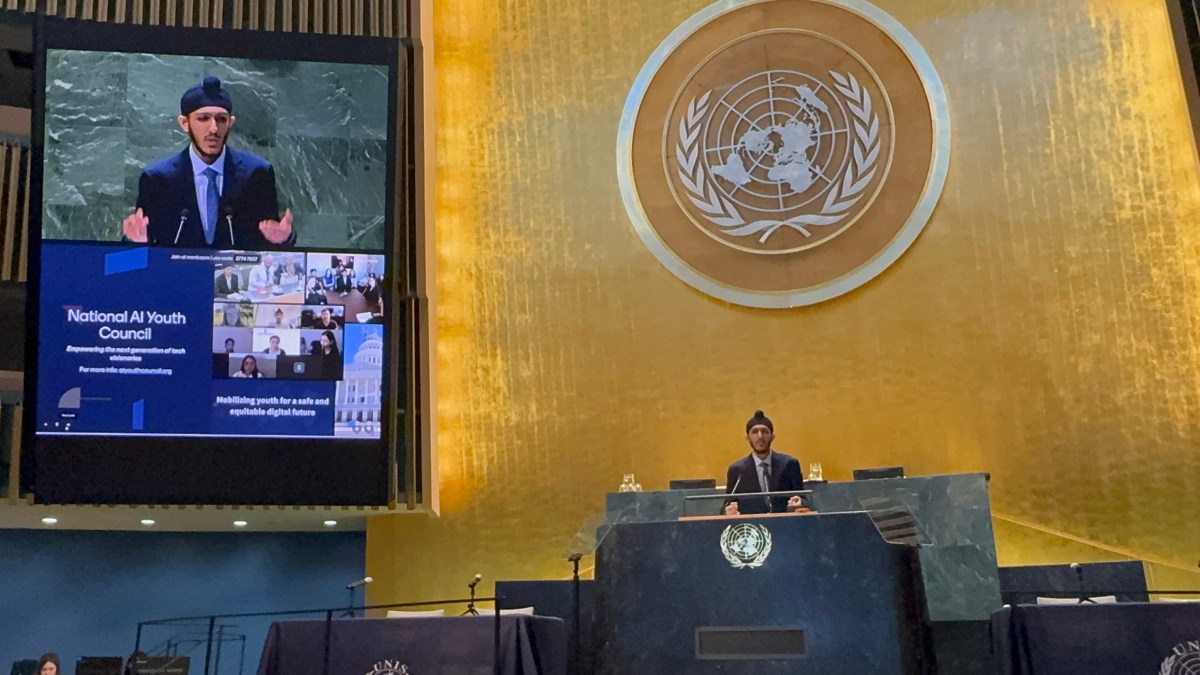
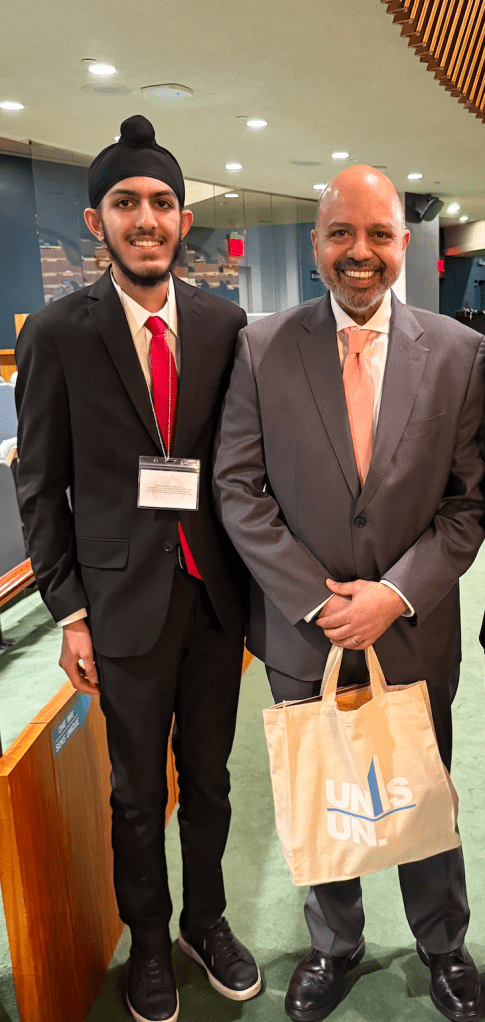
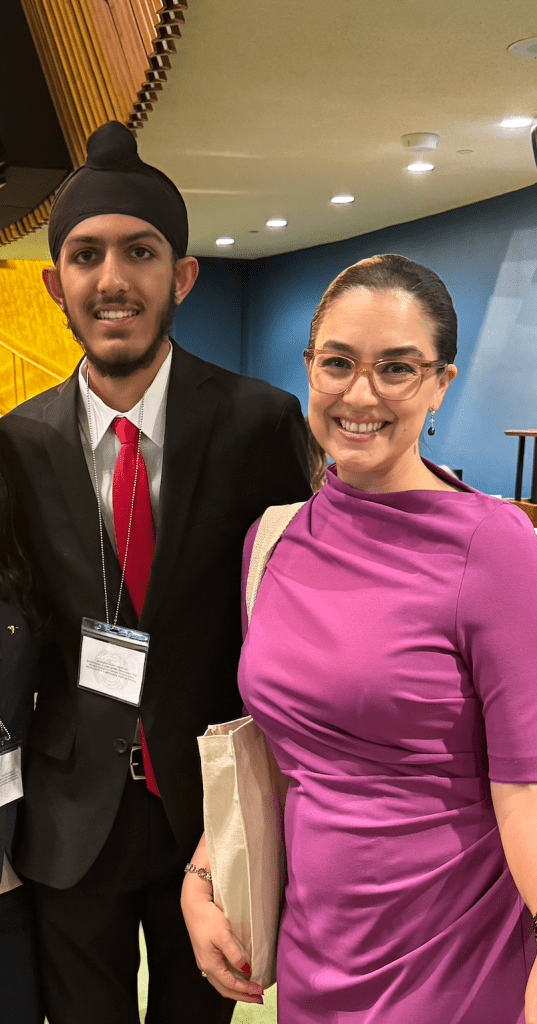
Last week, the United Nations General Assembly in New York became a stage for one of the youngest voices in global AI leadership. Harveer Saini, a youth advocate and founder of the National AI Youth Council, spoke before an audience of more than 700 attendees at the UN General Assembly conference which brought together diplomats, technologists, and change-makers from around the world.
His message was clear:
“The world often tells us that youth are the leaders of tomorrow. But I say different. We are the leaders of today.” – Harveer Saini, National AI Youth Council
His speech spanned the everyday presence of AI, the dangers of algorithmic discrimination, and the urgent need for young people to hold power in shaping technological policy. Harveer opened by illustrating just how embedded AI has become in modern life. He explained that the average person interacts with artificial intelligence more than 100 times per day – through facial recognition, social media algorithms, targeted ads, and more. Despite this constant exposure, Harveer noted, almost no one ever asks young people what they think about a technology that is rapidly determining their futures.
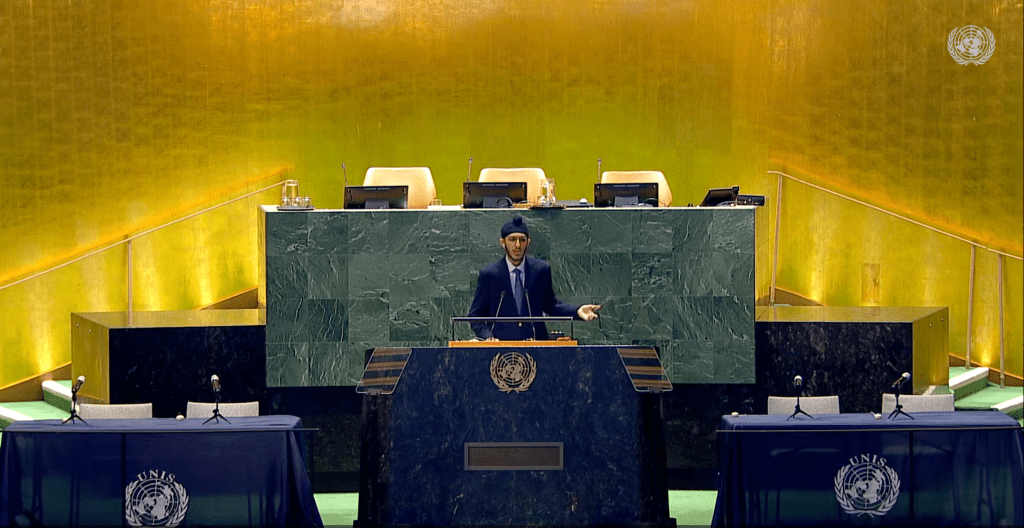
From there, Harveer shifted into the central theme of his speech: the automation of bias in emerging technologies like facial recognition. Drawing from both personal experience and research, he described the moment he realized that the racial prejudice he had faced growing up did not disappear in the digital world — it had simply taken new form.
“When I thought I had overcome the worst of it — I discovered something that honestly shook me to my core. The bias I had fought against in my daily life was no longer just in people. It was in AI, too.” – Harveer Saini, National AI Youth Council
Harveer also talked about the leading work the National AI Youth Council is doing in the responsible tech policy space. With delegates across 25+ states, the council has worked on more than 20 AI-related bills, the development of a global AI education curriculum, and landmark legislative victories, including major regulations on AI in K–12 public schools. His goal, he said, was to make it impossible for policymakers to ignore young people again.
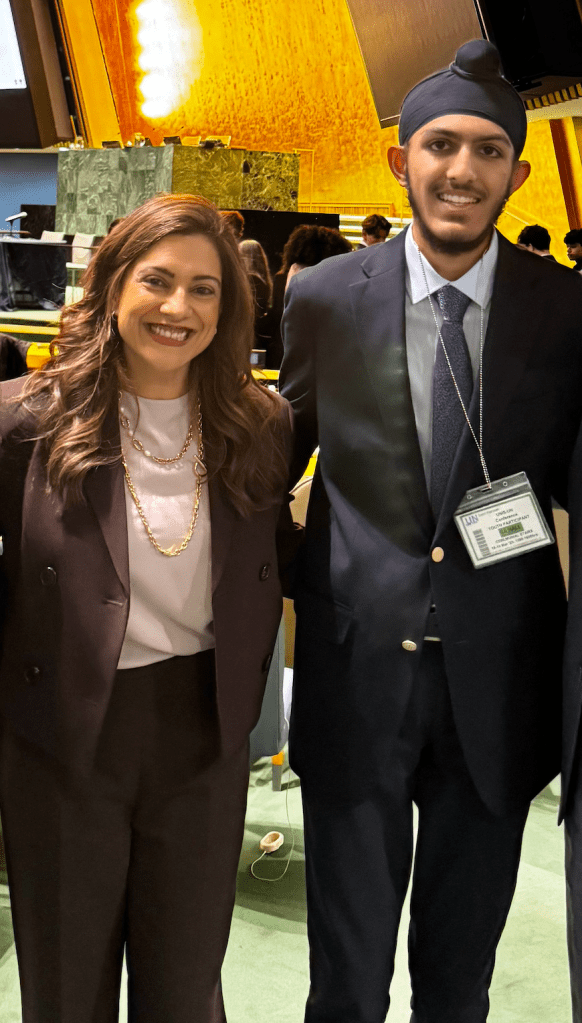
At the conference, he also had the opportunity to connect with global leaders shaping the future of AI and equity, including Reshma Saujani of Girls Who Code, UN Ambassadors from countries across the world, including El Salvador, Kuwait, and India, and Melissa Fleming, the UN’s Under-Secretary-General for Global Communications.
As global debates around AI continue to grow, voices like Harveer’s signal an important shift: the future of artificial intelligence is being shaped by the young people who will inherit it.
And if his message at the UN is any indication, the next generation isn’t waiting to be invited to the table. They’re already sitting at it.
 National AI Youth Council