Categories
Policy & Advocacy

Angela Li Advocates for Bot Disclosure in California Assembly

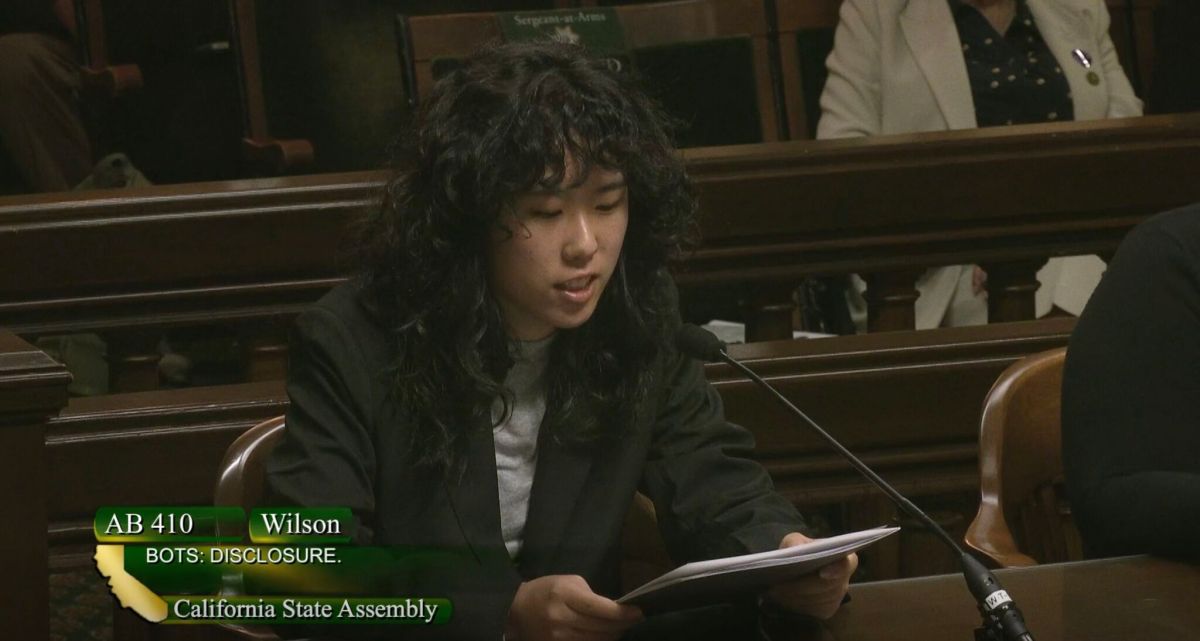
Angela Li, a junior in high school and Policy & Advocacy Committee Member of the National AI Youth Council, recently testified before the California State Assembly Standing Committee on Privacy and Consumer Protection in strong support of AB 410, a bill that updates and strengthens the state’s bot disclosure laws.

AB 410, authored by Assemblymember Lori D. Wilson, is a response to the growing influence of generative AI in our online spaces. The bill expands California’s original bot law to reflect today’s digital reality, where bots powered by generative AI can easily mimic human behavior. AB 410 would require bots to clearly disclose that they are not human before interacting with someone online. It also prohibits bots from misleading people about their identity and allows people to ask and receive truthful answers about whether they’re speaking with a bot.

Angela testified in front of lawmakers to make sure that young people’s experiences were heard loud and clear:

“Nearly half of global internet traffic today is driven by bots… students like me and my peers interact with AI daily, often without even realizing it.” – Angela Li, National AI Youth Council

Angela also shared a real story about a friend who was researching financial aid for college and unknowingly trusted a chatbot that gave incomplete and misleading advice. Her friend missed an important deadline, one that impacted her future:

“Had she known it was a bot, she could have verified the details. But she didn’t, and it cost her real opportunities.”

Angela made it clear that this isn’t about banning AI. It’s about giving people a fair shot at making informed choices online. Students, she argued, shouldn’t have to question whether the information they’re receiving comes from a person or a machine.

With a final vote of 12–1, the bill passed out of committee, marking a major win for transparency and safety in online interactions. Angela also had the chance to meet Assemblymember Wilson, calling it an honor after months of collaboration on the bill.

Through her testimony, Angela reminded legislators that AI policy isn’t just technical but. personal as well. One thing is for sure. Young people are no longer just using these technologies, they’re actively shaping them as well.
Categories
Policy & Advocacy

Youth Advocate Testifies for Equal Tech Education in California

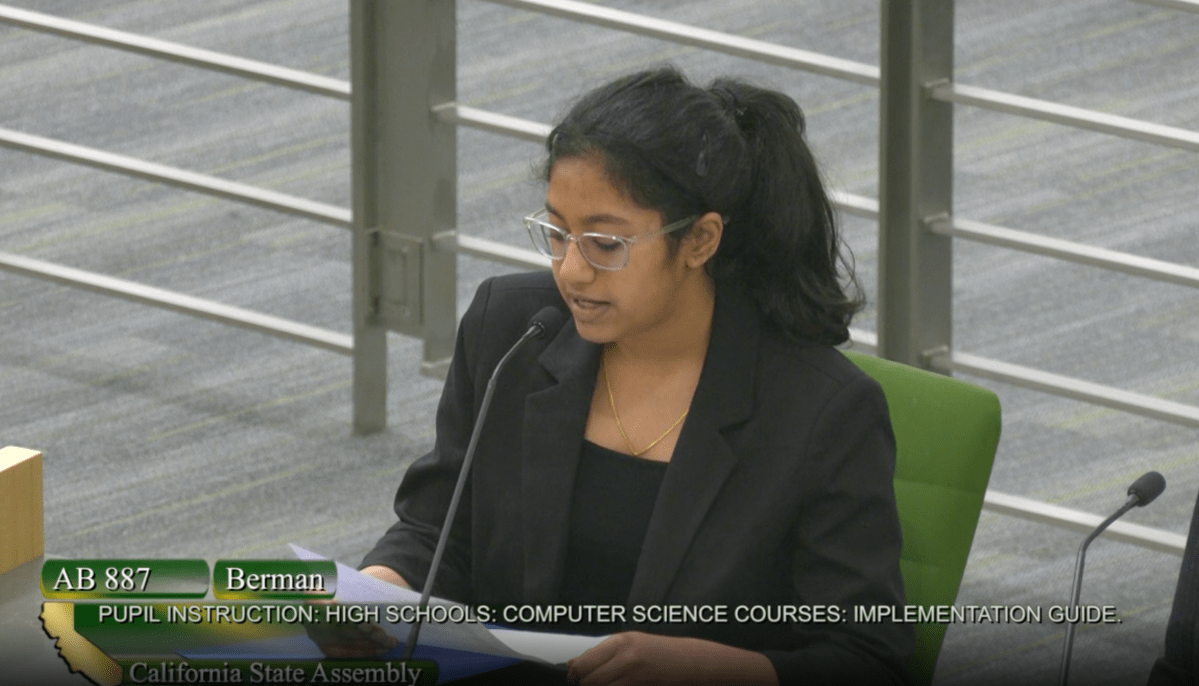
In a powerful display of youth leadership and civic engagement, Sweekriti Ratnam, a junior at Carlmont High School and the Secretary & Policy Committee Member of the National AI Youth Council, recently testified before the California State Assembly Standing Committee on Education in support of Assembly Bill 887 (AB 887).

Standing alongside Assemblymember Marc Berman, who authored the bill, Sweekriti delivered compelling testimony advocating for equal access to computer science education across California’s public high schools. Her voice added a vital youth perspective to the conversation:

“California has the country’s highest number of open computing jobs, and 91% of all California jobs are likely to require digital skills,” she explained. “This is why fostering digital literacy and computer education in our schools is so important to ensure job preparedness for all students.” – Sweekriti Ratnam, National AI Youth Council

AB 887 responds to a staggering digital divide in the state. Nearly half of California high schools don’t offer a single computer science course. Students in low-income, rural, and majority-Black and Latinx schools are the most likely to miss out. AB 887 proposes the California Computer Science Demonstration Grant Program, a new initiative aimed at funding computer science instruction in schools that currently don’t offer it. The pilot program will prioritize schools serving underrepresented students, helping bridge equity gaps in digital education and workforce access.

Sweekriti emphasized the real-world impact of such courses:

“I have seen the impact of computer science classes at my own high school, with many of my friends and peers learning important skills such as problem-solving and analytical thinking that they are able to apply in and outside the classroom.”

As a policy director at one of the nation’s largest youth-led organizations advocating for responsible AI, Sweekriti brought an informed, future-focused lens to her testimony. She reminded legislators that equitable access to computer science is not just a classroom issue but also a workforce issue and a civil rights issue.

AB 887 is a step toward ensuring every student in California, regardless of zip code or background, has access to foundational skills for a digitally connected world. Thanks to young leaders like Sweekriti, the student voice is finally being heard at the policymaking table.