Categories
Policy & Advocacy

Harveer Saini Advocates for AI Abuse Protection Bill in California

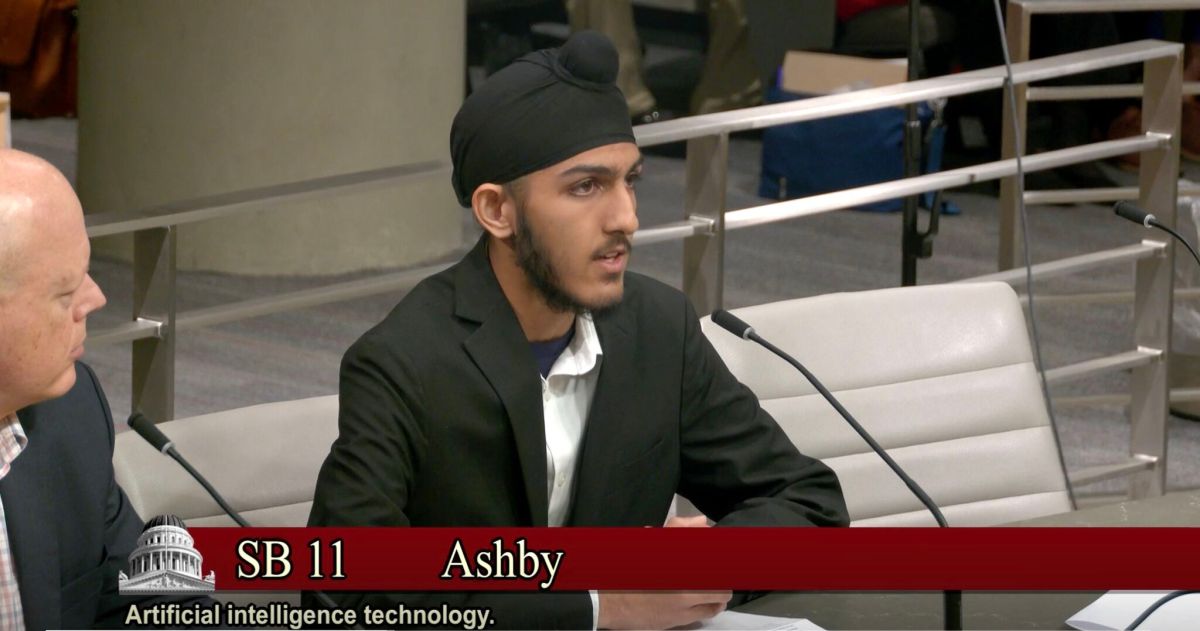
Last week at the California State Capitol, Harveer Saini, Founder and President of the National AI Youth Council, stood before the Senate Standing Committee on Public Safety to testify in support of Senate Bill 11, the Artificial Intelligence Abuse Protection Act. This bill, authored by Senator Angelique Ashby, takes direct aim at one of the most dangerous forms of AI misuse today — deepfakes and digital impersonation.

SB 11 passed the Senate Public Safety Committee with unanimous support, 6 to 0. Harveer testified alongside other advocates including Robert Jay Eleveld Jr. of TransparencyCoalition.ai, emphasizing how cross-sector collaboration is crucial in the fast-moving world of AI policy. Harveer also had the opportunity to meet Senator Ashby in person and thanked her for her leadership on the bill.
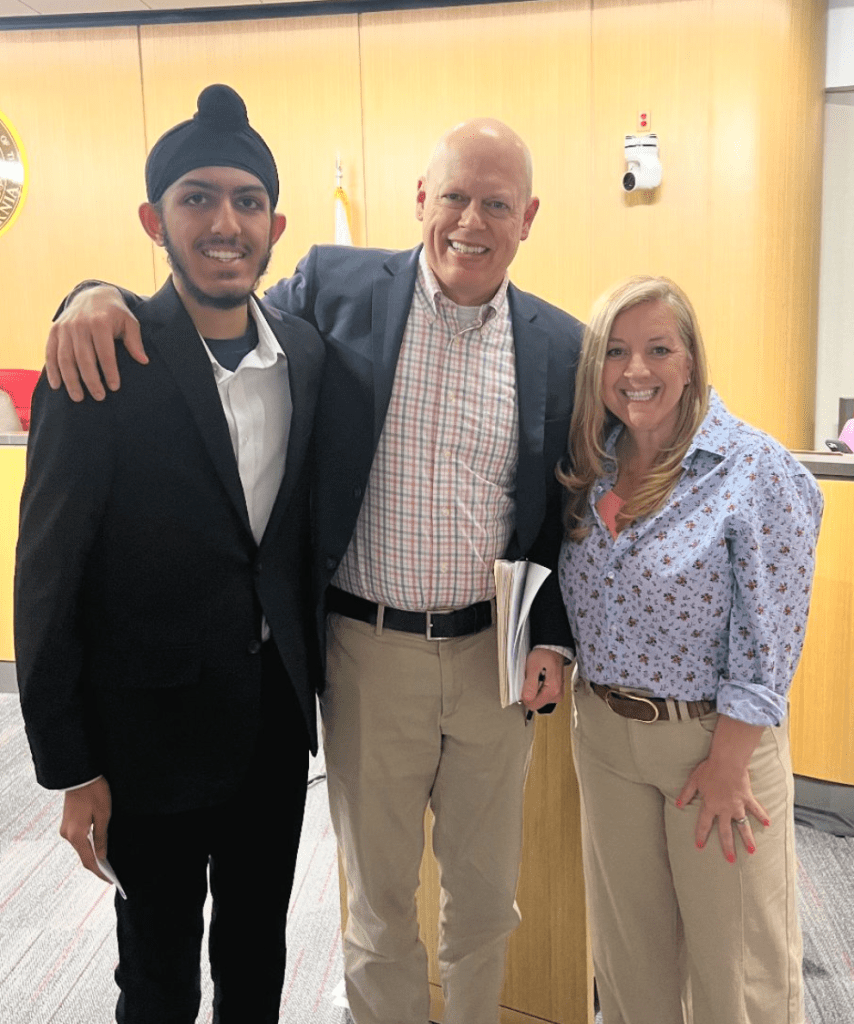
Harveer Saini alongside California Senator Ashby & Rob Eleveld of the Transparency Coalition

SB 11 does more than just update legal definitions. It ensures that digital replicas and AI-generated content are covered under existing impersonation laws. The bill gives victims legal recourse in both civil and criminal courts, requires platforms to provide clear consumer warnings about the misuse of AI tools, and mandates that California’s judicial system develop new rules for assessing AI-generated evidence in court.

Speaking before the committee, Harveer shared the reality that many students today are quietly enduring.

“A lot of people don’t realize that deepfakes are incredibly easy to make and accessible, even for students my age. One of my own closest friends fell victim to an AI-generated deepfake impersonation online that was spread on social media platforms for weeks. I watched her fall into severe depression while remaining powerless to do anything to help.” – Harveer Saini, National AI Youth Council

Harveer’s testimony wasn’t just technical. It was deeply personal. He painted a clear picture of how widespread and damaging this issue has become for young people, and how urgent the need for action is.

“Experiences like hers are not isolated. They reflect a larger issue faced by students across the country.”

As the founder of one of the nation’s largest youth-led AI policy organizations, Harveer made sure lawmakers understood that young people are not just affected by AI, but they are leading the fight to ensure it’s used responsibly. SB 11 is one step toward that future.
Categories
Policy & Advocacy

Angela Li Advocates for Bot Disclosure in California Assembly

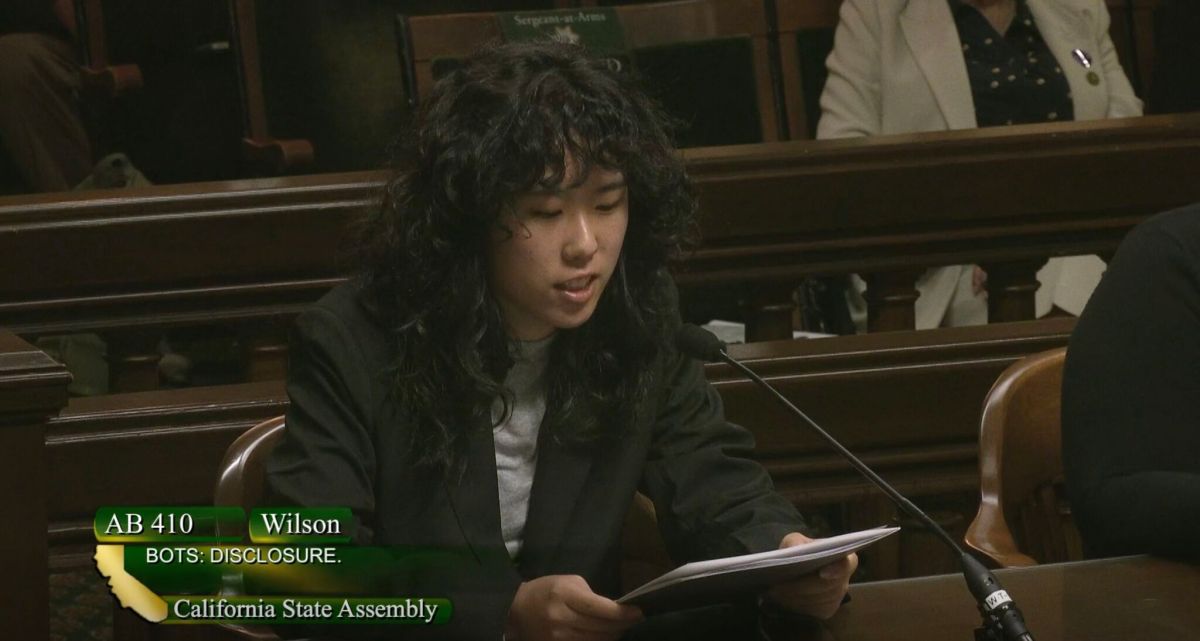
Angela Li, a junior in high school and Policy & Advocacy Committee Member of the National AI Youth Council, recently testified before the California State Assembly Standing Committee on Privacy and Consumer Protection in strong support of AB 410, a bill that updates and strengthens the state’s bot disclosure laws.

AB 410, authored by Assemblymember Lori D. Wilson, is a response to the growing influence of generative AI in our online spaces. The bill expands California’s original bot law to reflect today’s digital reality, where bots powered by generative AI can easily mimic human behavior. AB 410 would require bots to clearly disclose that they are not human before interacting with someone online. It also prohibits bots from misleading people about their identity and allows people to ask and receive truthful answers about whether they’re speaking with a bot.

Angela testified in front of lawmakers to make sure that young people’s experiences were heard loud and clear:

“Nearly half of global internet traffic today is driven by bots… students like me and my peers interact with AI daily, often without even realizing it.” – Angela Li, National AI Youth Council

Angela also shared a real story about a friend who was researching financial aid for college and unknowingly trusted a chatbot that gave incomplete and misleading advice. Her friend missed an important deadline, one that impacted her future:

“Had she known it was a bot, she could have verified the details. But she didn’t, and it cost her real opportunities.”

Angela made it clear that this isn’t about banning AI. It’s about giving people a fair shot at making informed choices online. Students, she argued, shouldn’t have to question whether the information they’re receiving comes from a person or a machine.

With a final vote of 12–1, the bill passed out of committee, marking a major win for transparency and safety in online interactions. Angela also had the chance to meet Assemblymember Wilson, calling it an honor after months of collaboration on the bill.

Through her testimony, Angela reminded legislators that AI policy isn’t just technical but. personal as well. One thing is for sure. Young people are no longer just using these technologies, they’re actively shaping them as well.

Categories
Policy & Advocacy

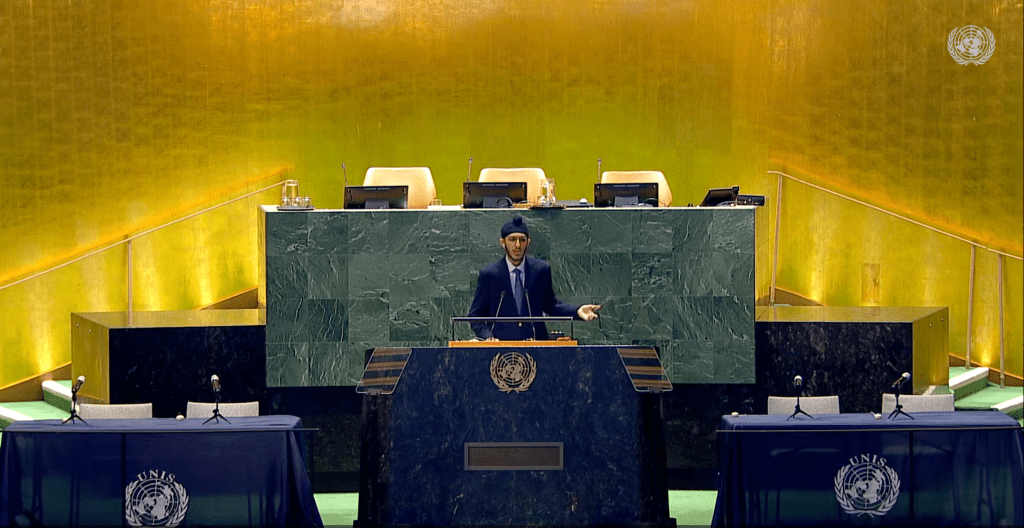
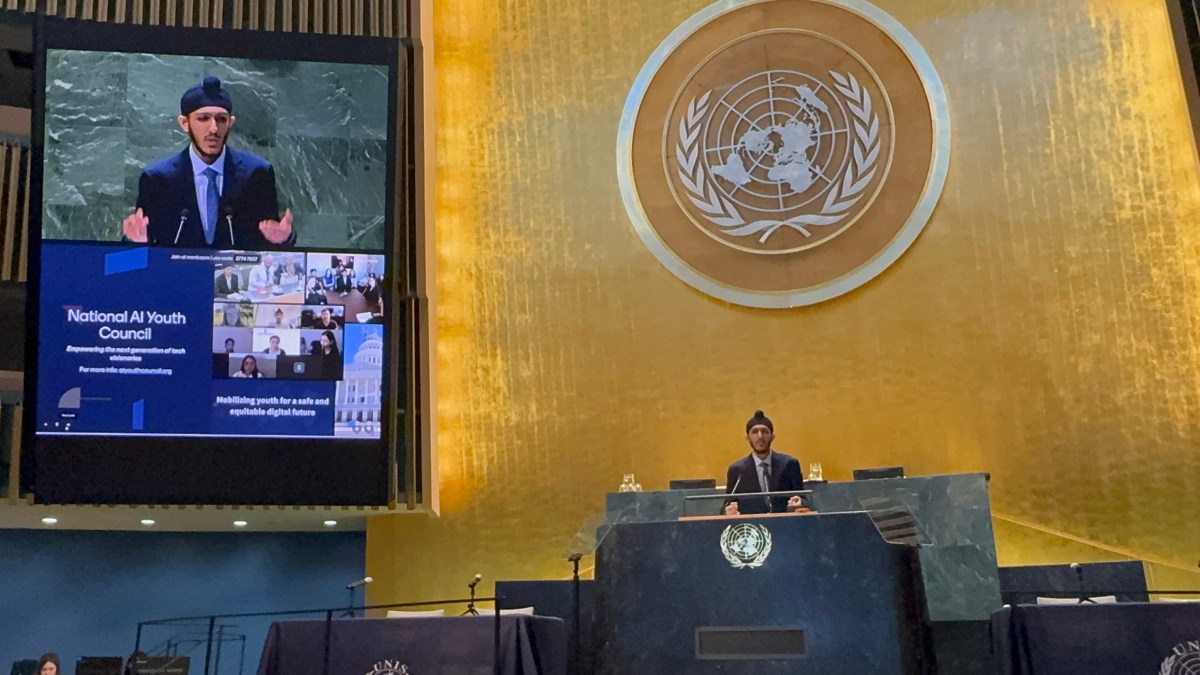
Harveer Saini at the UN General Assembly

Last week, the United Nations General Assembly in New York became a stage for one of the youngest voices in global AI leadership. Harveer Saini, a youth advocate and founder of the National AI Youth Council, spoke before an audience of more than 700 attendees at the UN General Assembly conference which brought together diplomats, technologists, and change-makers from around the world.

His message was clear:

“The world often tells us that youth are the leaders of tomorrow. But I say different. We are the leaders of today.” – Harveer Saini, National AI Youth Council

His speech spanned the everyday presence of AI, the dangers of algorithmic discrimination, and the urgent need for young people to hold power in shaping technological policy. Harveer opened by illustrating just how embedded AI has become in modern life. He explained that the average person interacts with artificial intelligence more than 100 times per day – through facial recognition, social media algorithms, targeted ads, and more. Despite this constant exposure, Harveer noted, almost no one ever asks young people what they think about a technology that is rapidly determining their futures.

From there, Harveer shifted into the central theme of his speech: the automation of bias in emerging technologies like facial recognition. Drawing from both personal experience and research, he described the moment he realized that the racial prejudice he had faced growing up did not disappear in the digital world — it had simply taken new form.

“When I thought I had overcome the worst of it — I discovered something that honestly shook me to my core. The bias I had fought against in my daily life was no longer just in people. It was in AI, too.” – Harveer Saini, National AI Youth Council

Harveer also talked about the leading work the National AI Youth Council is doing in the responsible tech policy space. With delegates across 25+ states, the council has worked on more than 20 AI-related bills, the development of a global AI education curriculum, and landmark legislative victories, including major regulations on AI in K–12 public schools. His goal, he said, was to make it impossible for policymakers to ignore young people again.

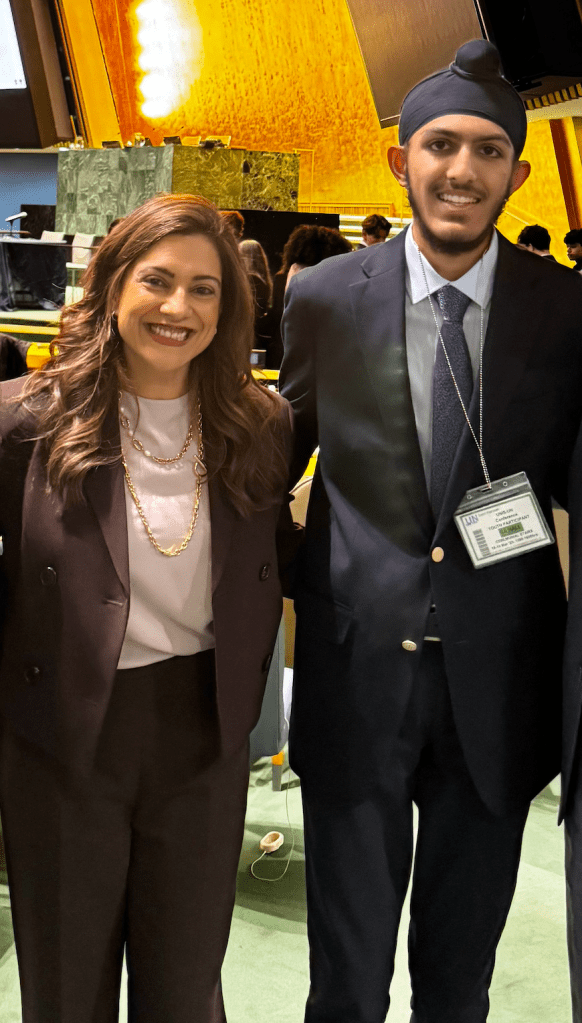
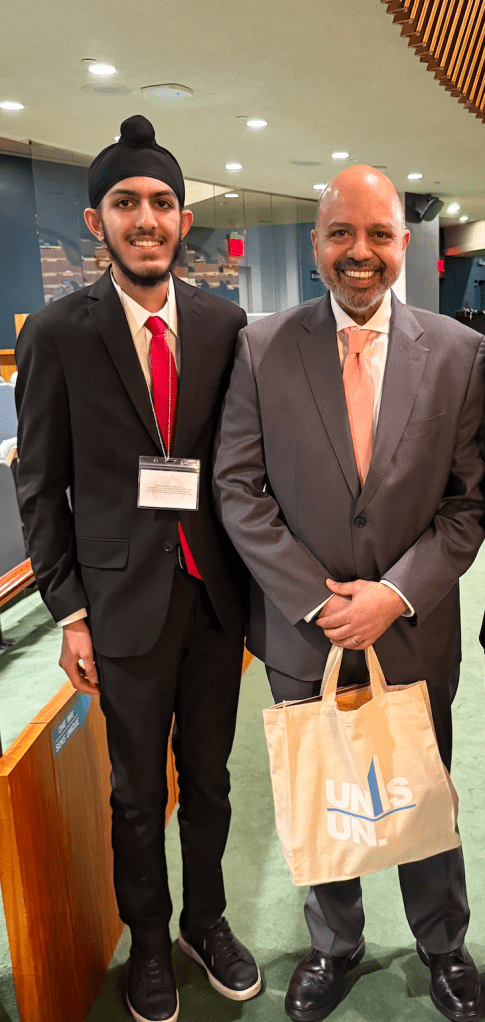
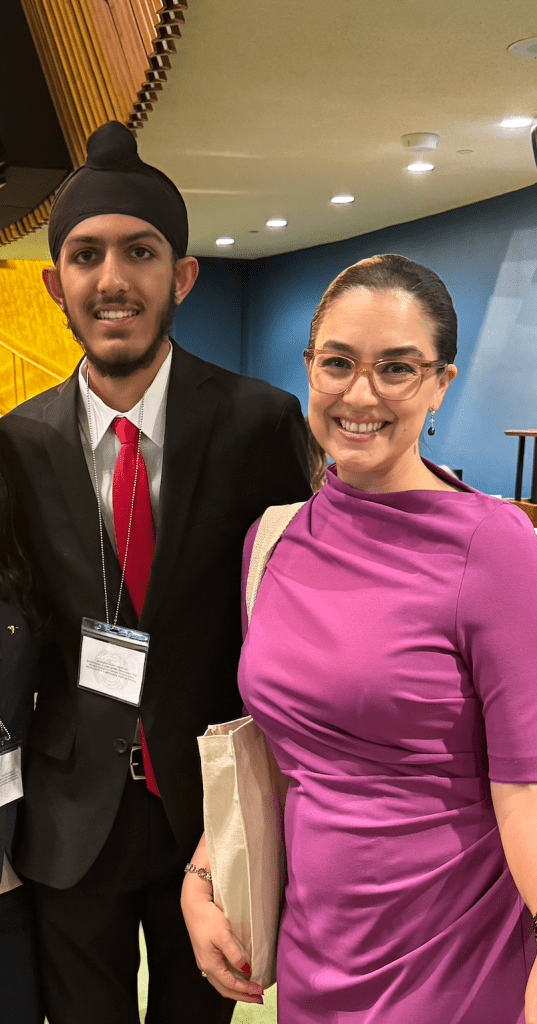
At the conference, he also had the opportunity to connect with global leaders shaping the future of AI and equity, including Reshma Saujani of Girls Who Code, UN Ambassadors from countries across the world, including El Salvador, Kuwait, and India, and Melissa Fleming, the UN’s Under-Secretary-General for Global Communications.

As global debates around AI continue to grow, voices like Harveer’s signal an important shift: the future of artificial intelligence is being shaped by the young people who will inherit it.

And if his message at the UN is any indication, the next generation isn’t waiting to be invited to the table. They’re already sitting at it.